How Climate Risk and Technology Are Reshaping U.S. Home & Property Insurance in 2025
Focus Keyphrase: U.S. property insurance trends 2025
Introduction: The New Reality for U.S. Homeowners
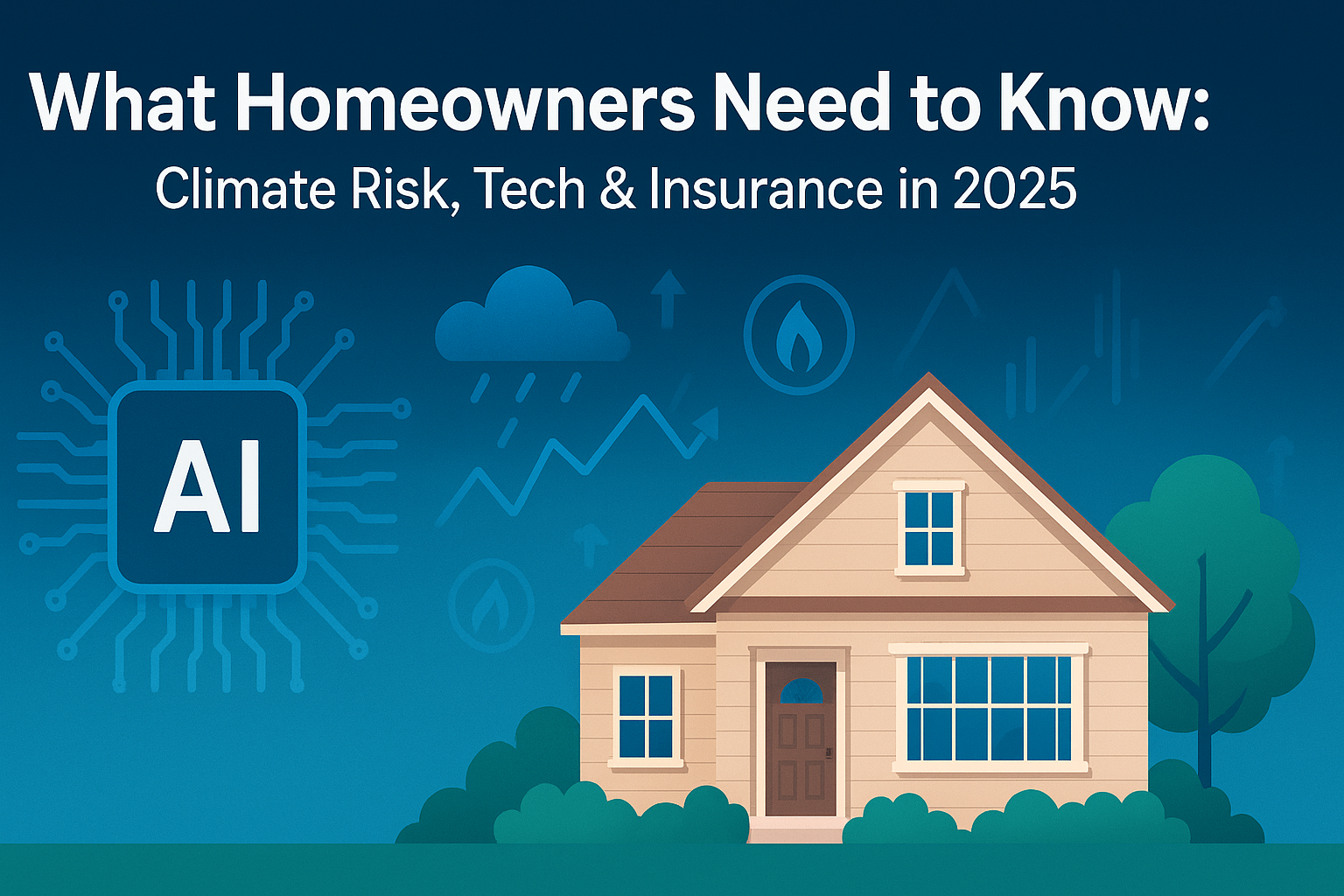
The American property insurance landscape in 2025 looks vastly different from what it did just a few years ago. With climate-related disasters increasing in frequency and severity, insurers are rethinking how they assess risk, calculate premiums, and deliver coverage. At the same time, rapid technological advances — from artificial intelligence to IoT-based home monitoring — are introducing both challenges and opportunities for insurers and policyholders alike.
This article explores the latest U.S. property insurance trends in 2025, focusing on how climate risk and digital innovation are reshaping the market. Whether you’re a homeowner, real estate investor, or insurance professional, understanding these trends is critical for staying protected and financially prepared.
1. Climate Risk Is Now the Core of Property Insurance
Over the past decade, climate change has transitioned from a peripheral consideration to a central factor in property insurance pricing and availability. The National Oceanic and Atmospheric Administration (NOAA) recorded over $90 billion in insured losses due to weather disasters in 2024 alone. Hurricanes, floods, and wildfires are forcing insurance carriers to rethink how they evaluate property vulnerability.
1.1 Increasing Premiums and Shrinking Coverage
States like Florida, California, and Louisiana have seen homeowners’ insurance premiums rise by as much as 30–50% in just two years. Some insurers have even withdrawn entirely from high-risk zones, citing unsustainable loss ratios. This has led to the rise of state-backed insurers of last resort, such as Citizens Property Insurance Corporation in Florida, which now covers over 1.2 million policies.
1.2 The Role of Predictive Climate Modeling
Insurance companies are investing heavily in climate analytics and AI-based modeling. Platforms like Jupiter Intelligence and Riskthinking.AI are helping underwriters assess the long-term risk of floods, fires, and hurricanes on a granular, property-specific level. By integrating satellite imagery, weather forecasts, and historical data, these tools enable insurers to set more precise premiums — and in some cases, incentivize resilience upgrades by homeowners.

2. Technology: The Digital Backbone of Modern Insurance
Technology is rapidly transforming how insurers interact with customers, manage claims, and monitor insured properties. The 2025 property insurance market is no longer just about covering losses — it’s about preventing them using real-time data and digital engagement.
2.1 Smart Home Devices & IoT Sensors
Smart home devices like leak detectors, motion sensors, and connected smoke alarms have become integral to many homeowners’ policies. Insurers such as State Farm and Allstate now offer discounts to policyholders who install preventive devices that transmit data directly to their risk assessment platforms.
2.2 Artificial Intelligence and Automated Claims
AI is revolutionizing the claims process. Tools like Tractable AI analyze property photos and estimate repair costs within minutes. What used to take weeks can now be completed in a fraction of the time — reducing fraud and improving customer satisfaction. Additionally, chatbots and virtual agents handle first-notice-of-loss reports 24/7, streamlining operations and cutting administrative costs.
2.3 Blockchain for Transparency and Fraud Prevention
Blockchain is being adopted to ensure transparent, tamper-proof claims management. By keeping immutable records of policies, claims, and settlements, blockchain reduces disputes between insurers and policyholders while simplifying audits and regulatory compliance.
3. The Rise of Usage-Based and On-Demand Home Insurance
Inspired by auto insurers’ usage-based models, home insurance is also evolving toward flexibility. Companies like Lemonade and Hippo are experimenting with micro-coverage — short-term or item-specific insurance that can be turned on or off through a mobile app.
For instance, a homeowner renting their property through Airbnb can activate short-term coverage during guest stays and pause it afterward. This level of customization appeals to younger, tech-savvy homeowners who prioritize control and affordability.
4. Federal & State Regulations Catching Up
Insurance regulators across the U.S. are scrambling to adapt to these shifts. The National Association of Insurance Commissioners (NAIC) introduced new guidelines in 2025 requiring carriers to disclose how climate risks influence their pricing models. Some states are even mandating that insurers offer mitigation incentives — discounts for installing fire-resistant roofs or flood barriers.
Meanwhile, privacy concerns are growing around the use of personal and household data collected through IoT devices. Regulators are emphasizing stricter consent and data-handling standards to prevent misuse of sensitive information.
5. How Homeowners Can Stay Protected in 2025
For American homeowners, navigating this complex environment requires both awareness and action. Here are practical steps to ensure adequate coverage in 2025:
- Review your policy annually: Ensure your coverage reflects your property’s true replacement value and any recent upgrades.
- Use technology to your advantage: Install IoT devices that monitor water leaks, smoke, and security — and report them to your insurer for potential discounts.
- Ask about climate risk reports: Many insurers now offer property-specific risk assessments to help you understand flood or wildfire exposure.
- Consider parametric insurance: These policies pay out automatically when certain events occur (e.g., a hurricane reaches Category 4) — ensuring faster recovery.
- Bundle policies where possible: Combining home and auto insurance can help offset rising costs.
6. Future Outlook: What’s Next for Property Insurance?
By 2030, property insurance in the U.S. is expected to be fully data-driven. AI models will predict property risk with near-real-time accuracy, and policies will dynamically adjust based on ongoing risk exposure. Insurers will increasingly act as “risk partners” rather than claim payers — offering continuous monitoring, risk alerts, and even preventive maintenance services.
However, affordability remains a critical concern. Without stronger public-private partnerships and updated regulatory frameworks, millions of Americans could find themselves priced out of essential protection.
Conclusion
The convergence of climate risk and technology has set a new course for the U.S. property insurance industry in 2025. Homeowners must adapt to this reality by embracing smart tools, understanding their risk exposure, and choosing insurers that value transparency and innovation.
While challenges like rising premiums and climate-driven coverage gaps persist, the growing role of data, automation, and climate awareness offers a path forward — one where both insurers and policyholders can achieve greater resilience in an unpredictable world.