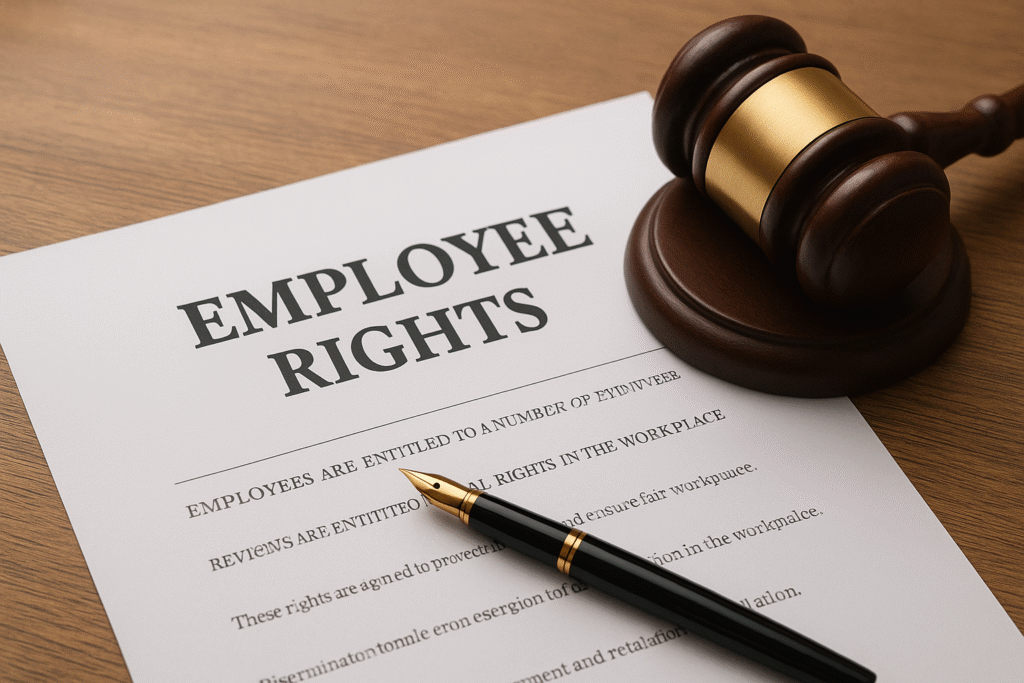
Introduction: Every employee deserves a fair, safe, and respectful workplace. Yet, many workers in the United States don’t fully understand the protections they already have under federal law. Knowing your legal rights is essential—it helps you stand up against unfair treatment, discrimination, and unsafe conditions. In this article, we’ll explain the most important employee legal rights and the U.S. laws that support them.
1. Your Right to Fair Pay and Overtime Compensation
The Fair Labor Standards Act (FLSA) guarantees employees the right to a fair minimum wage and overtime pay. If you work more than 40 hours a week, you’re generally entitled to receive one and a half times your regular hourly rate for overtime hours. This law ensures you are compensated fairly for every hour worked.
Keep in mind that not all employees are covered under FLSA. Certain salaried and executive positions are exempt. If you think you’re not receiving proper pay, you can file a complaint with the U.S. Department of Labor (DOL).
2. Your Right to a Safe and Healthy Workplace
Safety at work is not optional—it’s your legal right. The Occupational Safety and Health Act (OSHA) requires employers to maintain a safe environment free from recognized hazards. You have the right to report unsafe working conditions without fear of losing your job. Employers must also provide safety training, protective gear, and proper equipment.
If your workplace feels unsafe, you can confidentially report it to the Occupational Safety and Health Administration. Retaliation for reporting is strictly illegal.
3. Your Right to Freedom from Discrimination
Federal law protects you from discrimination at work. Under Title VII of the Civil Rights Act of 1964, employers cannot discriminate based on race, color, religion, sex, or national origin. Additional laws—like the Age Discrimination in Employment Act (ADEA) and the Americans with Disabilities Act (ADA)—extend these protections to cover age and disability status.
Discrimination can occur in hiring, promotions, job assignments, and termination. If you experience discrimination, you can file a complaint with the Equal Employment Opportunity Commission (EEOC).
4. Your Right to Equal Pay
The Equal Pay Act of 1963 ensures men and women receive equal pay for equal work. This includes not just salary, but also bonuses, benefits, and other forms of compensation. Employers cannot lower anyone’s pay to create equality; they must raise the lower-paid employee’s wage instead.
5. Your Right to Family and Medical Leave
The Family and Medical Leave Act (FMLA) provides eligible employees with up to 12 weeks of unpaid, job-protected leave per year. You can use this leave for major life events like the birth or adoption of a child, a serious health condition, or caring for a family member. During FMLA leave, your employer must maintain your group health insurance coverage.
This law ensures that employees can focus on their families or health without losing their jobs.
6. Your Right to Privacy
While employers may monitor work emails and company devices, you still have important privacy rights. Your employer cannot share or misuse your personal, financial, or medical information without your consent. State privacy laws may offer additional protection, especially regarding background checks and data storage.
7. Your Right to Be Free from Retaliation
No employee should be punished for standing up for their rights. Federal law protects workers from retaliation when they report violations, file complaints, or participate in investigations. Whistleblower protections under OSHA and Title VII make it illegal for employers to fire, demote, or harass employees who speak up.
8. Your Right to Reasonable Accommodation
Under the Americans with Disabilities Act (ADA), employees with disabilities have the right to request reasonable accommodations. These may include modified work schedules, accessible equipment, or the option to work remotely. Employers are required to engage in an open discussion to find practical solutions, unless doing so causes significant hardship to the business.
Similarly, Title VII also requires reasonable accommodations for religious beliefs or practices.
9. Your Right to Unionize and Bargain Collectively
The National Labor Relations Act (NLRA) gives employees the right to form, join, or assist labor unions. You can also engage in collective bargaining to improve your pay and working conditions. Employers are prohibited from threatening or punishing workers who choose to unionize or support union activities.
10. Your Right to a Workplace Free from Harassment
Harassment in the workplace is unlawful. Whether it’s sexual harassment or any unwelcome behavior based on race, religion, or disability, you have the right to work in an environment free from hostility. Employers must investigate complaints promptly and take action to prevent further misconduct.
How to Protect Your Rights
If you believe your rights have been violated, document everything. Keep records of emails, messages, or incidents that prove your case. Then, contact an employment attorney or file a claim with the appropriate federal agency—such as the EEOC or the Department of Labor.
Understanding your rights is the first step toward protecting them. Staying informed helps you create a fair, respectful, and safe work environment for yourself and your colleagues.
Frequently Asked Questions (FAQs)
1. What should I do if I’m not paid for overtime?
If your employer refuses to pay overtime, you can file a complaint with the U.S. Department of Labor’s Wage and Hour Division. Keep detailed records of hours worked and payments received.
2. Can I be fired for reporting discrimination?
No. Federal law protects you from retaliation. Your employer cannot terminate or discipline you for filing a discrimination complaint or assisting in an investigation.
3. What is considered a reasonable accommodation under the ADA?
A reasonable accommodation is any change in the work environment that allows an employee with a disability to perform essential job duties—such as flexible scheduling, assistive technology, or remote work options.
4. How can I report unsafe working conditions?
You can report unsafe conditions directly to OSHA. Reports can be filed online, by phone, or by mail—and you can choose to remain anonymous.
Conclusion
Knowing your employee legal rights empowers you to create a fair and respectful workplace. From fair pay and safety to privacy and anti-discrimination protections, these laws ensure you are treated with dignity at every step of your career. Stay informed, speak up, and never hesitate to protect your rights under the law.
Learn the most important legal rights every U.S. employee should know. Understand workplace laws like FLSA, ADA, OSHA, FMLA, and more to protect your rights at work.