Meta Description: Discover how commercial insurance in the U.S. is evolving in 2025. Learn about rising liability costs, litigation challenges, and how AI is reshaping business risk management.
Focus Keyphrase: commercial insurance trends 2025
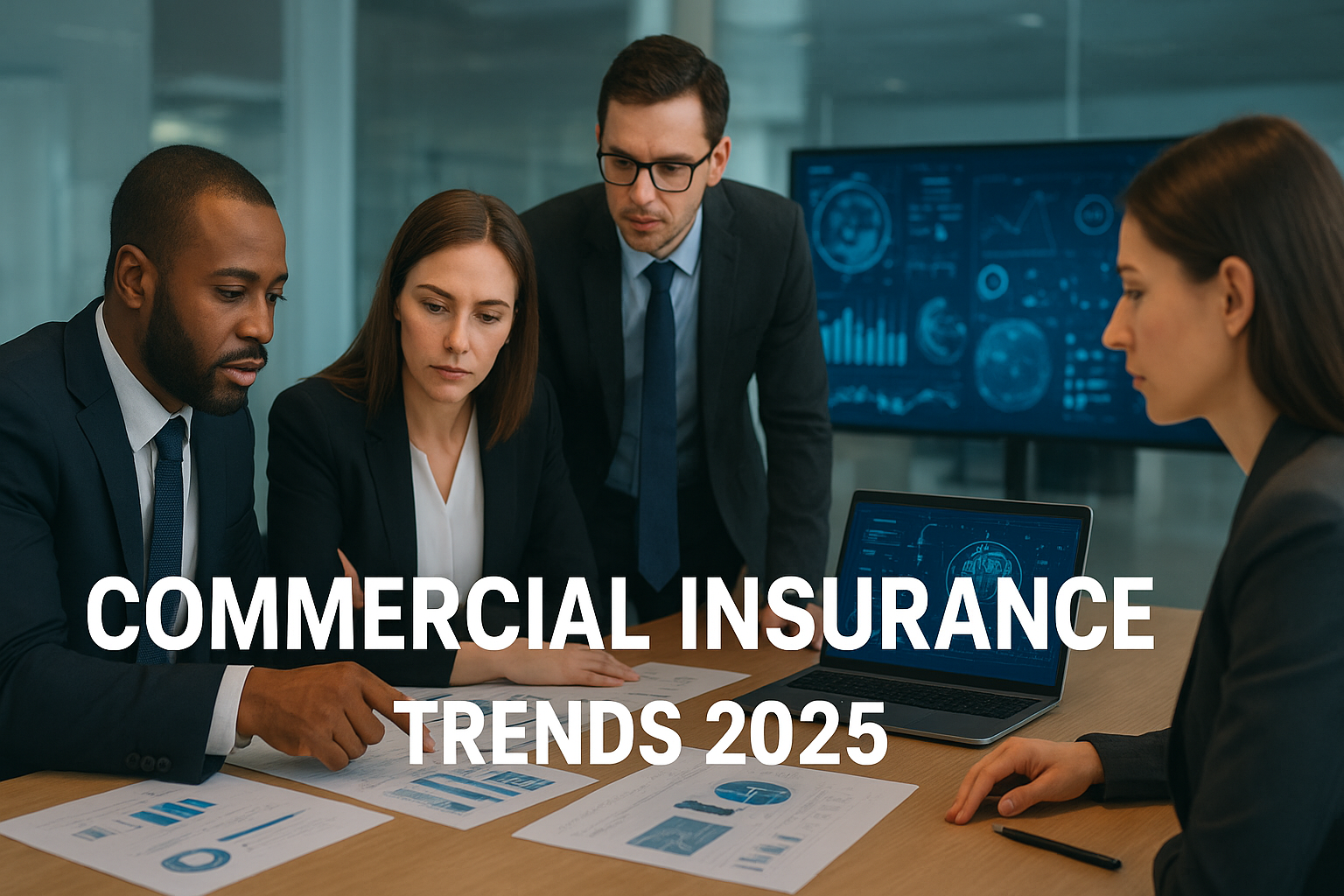
As we move through 2025, the commercial insurance landscape in the U.S. is transforming faster than ever. Businesses are facing skyrocketing liability costs, unpredictable litigation outcomes, and a new wave of AI-driven risks. These changes are forcing companies — from small businesses to global enterprises — to rethink how they purchase, manage, and evaluate their insurance coverage.
1. Understanding the State of Commercial Insurance in 2025
The U.S. commercial insurance sector is valued at over $380 billion in 2025, covering property, liability, workers’ compensation, and specialized industry risks. According to data from Gallagher and Aon, premiums are rising between 8%–15% in most commercial lines, particularly general liability and umbrella coverage.
This surge is primarily due to two overlapping forces: the litigation explosion and the emergence of new, technology-based risks like AI misuse, data breaches, and autonomous systems.
2. The Rise of Liability & Litigation Costs
One of the biggest stories in 2025 is the continued rise in liability insurance premiums. Jury verdicts, often called “nuclear verdicts”, have become increasingly common, with some settlements exceeding $100 million in product liability and negligence cases.
Key drivers of this trend include:
- Social inflation: Courts are awarding higher damages due to shifting societal expectations and perceptions of corporate accountability.
- Litigation financing: Third-party investors fund lawsuits for profit, increasing both volume and severity of claims.
- Legal system delays: Backlogs from pandemic years have led to congested courts and higher costs per case.
As a result, many insurers are tightening underwriting standards or capping policy limits, particularly for trucking, construction, and healthcare industries.
3. AI and Emerging Technology: A Double-Edged Sword
Artificial Intelligence (AI) is revolutionizing how insurers operate — but it’s also creating new risk categories that traditional policies weren’t built to handle. Businesses leveraging AI tools for automation, hiring, and customer service are now exposed to potential lawsuits related to algorithmic bias, data misuse, and intellectual property.
In response, insurers are developing AI liability policies that cover financial losses arising from flawed AI decisions or cyber incidents linked to autonomous systems. These are often packaged as part of broader Tech E&O (Errors & Omissions) or Cyber Liability Insurance products.
4. Cybersecurity, Data Breaches & Digital Exposure
Cyber risks continue to dominate boardroom discussions. The cost of a single data breach in 2025 averages $9.5 million in the U.S., according to IBM Security. Small and mid-sized businesses are now prime targets due to weaker defenses and higher payout likelihoods.
To mitigate this, insurance carriers are demanding stronger cybersecurity measures — such as multi-factor authentication (MFA), endpoint encryption, and employee cyber training — before renewing or issuing cyber coverage.
5. Inflation, Economic Pressure & Premium Increases
Persistent inflation continues to drive up claim severity. Repair costs, legal fees, and replacement expenses are all 10–20% higher than pre-pandemic levels. For sectors like manufacturing and transportation, this means significant increases in general liability and property premiums.
Many insurers are introducing indexation clauses that automatically adjust policy limits based on inflation data, helping businesses stay adequately insured — but at a higher price.
6. Regulatory & ESG (Environmental, Social, Governance) Factors
Regulators and investors are increasingly demanding transparency on environmental and social responsibility. In 2025, ESG-related liability has become a top priority. Companies face growing exposure from greenwashing claims and inaccurate sustainability reporting.
Insurance companies are now offering ESG liability endorsements and consulting services to help businesses manage compliance risks in this evolving landscape.
7. AI-Driven Underwriting and Predictive Analytics
On the positive side, AI is helping insurers become more efficient. Predictive analytics tools now allow carriers to underwrite policies faster and detect fraud more accurately. This technology is also used by brokers to customize coverage options in real time, improving pricing accuracy and customer experience.
However, this also introduces new challenges around transparency and data ethics. Regulators are closely monitoring how insurers use AI to ensure fairness and prevent algorithmic discrimination.

8. Industry-Specific Insights
Construction & Manufacturing
These sectors continue to experience high loss frequency, driven by supply chain disruptions and rising materials costs. Contractors are turning to wrap-up insurance programs to consolidate coverage and reduce administrative burden.
Healthcare
Medical malpractice and professional liability premiums remain among the highest. AI diagnostic tools add another layer of exposure as errors in machine-assisted medical decisions could lead to claims.
Logistics & Transportation
Trucking companies face soaring premiums due to accident litigation and driver shortages. Many fleets are adopting telematics to improve safety scores and negotiate lower insurance costs.
Technology & SaaS Businesses
Startups are increasingly purchasing combined Cyber + E&O coverage as investors demand proof of risk management. AI start-ups, in particular, are under scrutiny for potential misuse of personal data.
9. Strategies Businesses Are Using to Reduce Costs
- Bundling policies: Combining property, liability, and cyber coverage with one carrier to secure multi-policy discounts.
- Risk retention groups (RRGs): Industry-based self-insurance models that spread costs among similar businesses.
- Captive insurance structures: Large companies creating in-house insurance entities to manage risk more efficiently.
- Investing in AI safety audits: Regular reviews to ensure compliance and minimize exposure from AI misuse.
10. The Role of Brokers & InsurTech Firms
Modern brokers are acting more like risk consultants than traditional policy sellers. InsurTech platforms like Lemonade, NEXT, and Coalition are using automation to simplify quotes, claims, and renewals — bringing transparency and personalization to commercial insurance.
11. Looking Ahead: The Next 5 Years
By 2030, commercial insurance will be far more data-driven, with dynamic pricing and continuous underwriting based on real-time data. AI ethics, ESG responsibility, and legal reform will determine how sustainable the current system remains.
Businesses that embrace proactive risk management, invest in cybersecurity, and partner with forward-thinking insurers will have a major advantage in controlling premiums and reducing liabilities.
Conclusion
The commercial insurance market in 2025 stands at a crossroads — facing both rising costs and unprecedented technological opportunity. Litigation, inflation, and AI risk are testing the limits of traditional policies, but they’re also driving innovation across the industry.
For U.S. businesses, success in this new environment depends on understanding these evolving risks, collaborating closely with insurers, and implementing smarter, AI-informed protection strategies.
Key takeaway: The future of commercial insurance isn’t just about transferring risk — it’s about intelligently managing it in a world powered by data, automation, and accountability.
Published on November 10, 2025 • by Filmihq.xyz